About 70,000 Louisiana Medicaid patients could lose in-network access to Ochsner Health providers after Dec. 1 as contract negotiations between Ochsner and Louisiana Healthcare Connections remain unresolved.

Crescent City Schools' Constellations program fills crucial service gaps in New Orleans’ decentralized school system by offering specialized education for students with cognitive disabilities.

A growing body of work illustrating the effect of gun violence on overall physical health. That matters in Orleans Parish, which has historically ranked among the worst in the nation for per-capita gun violence.

As a national parasite outbreak leaves New Orleans residents looking for regionally grown produce, corner stores and growers step in to fill healthy food gaps.

In tense meeting, SpaceX managers told locals the massive spaceport won’t affect them at all, until locals pressed them for specifics

The Board of Commissioners traded the safety of immigrant families for a $530,000 contract on a toxic site. Though the doors are opening in a few days, the commissioners still have time. What they may not have is the courage to undo this mistake.

Republicans in Congress provided billions in federal funding for local departments that are now an active arm of the nation's mass deportation campaign.
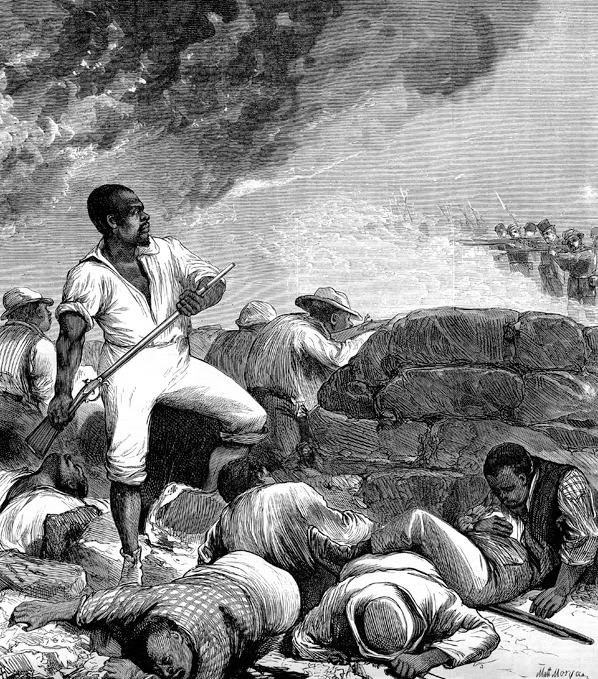
'A Louisiana state court holding court on a mass grave violates everything I learned in law school,' writes Moore, a retired attorney.


A DeSmog review found that, across major fossil fuel companies, AI is increasingly being integrated into fossil fuel operations, from seismic exploration and drilling to equipment monitoring and field development.