At Fannie C. Williams Charter School, eighth grader Ja’myra Garrison was an honor student who played on the volleyball team, sang in the choir and participated in Black History programs.
On May 1, one week before her middle school graduation, Ja’myra was pulled out of lunch, handcuffed and taken to a juvenile detention center.

School leaders allege that Ja’myra, a 14-year-old without a disciplinary record who was in the running for valedictorian of her class, made a social media post saying she was going to “shoot up the school.” But Ja’myra’s treatment has raised concerns among education activists, who say it was the wrong response to a young high-achieving student who made no proven threat of violence.
Given the circumstances, advocates say, administrators could have opted to send Ja’myra to speak with a guidance counselor or mental health professional. Instead, she was questioned, arrested, taken to jail and barred from attending her eighth-grade graduation ceremony.
A police search of her phone found no evidence supporting the school’s allegation, according to Ja’myra and two education advocates who spoke with The Lens. And Ja’myra contends that she did not say or post anything about shooting up the school.
“I got in trouble maybe a few times, but it was never anything bad,” she told The Lens. “I never started a fight, not bullying, none of that … It was so unexpected and surprising to me.”
‘Ja’myra wasn’t going to hurt nobody’

School officials should have considered the child holistically, said longtime mentor Dominque Jones-Johnson, who said Ja’myra “has always been feisty, but she’s never been defiant.”

She has attended Fannie C. Williams since kindergarten without any discipline issues, said Jones-Johnson, the co-founder of the nonprofit Daughters Beyond Incarceration, which supports Ja’myra and other girls with incarcerated parents.
“Ja’myra wasn’t going to hurt nobody,” Jones-Johnson said. “They didn’t have to walk her out in handcuffs. You traumatized that child and now you gave her the belief that she can’t trust the police.” The charges against Ja’myra have now been dropped, according to Jones-Johnson.
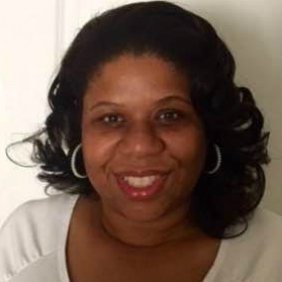
Longtime community activist Ashana Bigard, the director of the advocacy organization Amplify Justice, also expressed concerns about the way administrators at Fannie C. Williams handled the situation.
“Children who are in middle school say all kinds of things because of the developmental phase they’re in,” said Bigard, who believes that veteran educators generally know this. “Most of the time you can assess a child’s past behavior to know if they’re serious.”
Fannie C. Williams did not respond to multiple requests for comment from The Lens. A spokesperson for NOLA Public Schools also did not respond to a request for comment.
Ja’myra’s account of what happened is fairly simple. She was pulled out of the cafeteria on Friday, May 1 by Terry Green, an upper-grade dean of students at Fannie C. Williams, who took her to the principal’s office. Green and the school’s principal, Kelly Batiste, accused her of saying that she was going to shoot up the school, which Ja’myra denied. After speaking with Green and two of Ja’myra’s teachers, the principal called the police, Ja’myra said.
When two New Orleans Police Department officers arrived at Fannie C. Williams, Ja’myra was asked to unlock her phone and show its contents to the officers, she said. She was not allowed to call her mother, despite asking to do so.
“I didn’t know what to say, I didn’t know how to feel. I was just sitting there,” she said.
Her mother, Thaddelisha Lewis, said she was “heartbroken” by the school’s treatment of her daughter, and angry that she wasn’t informed of the arrest until after it happened.
“I wasn’t there,” Lewis said. “Nobody was there to defend my child.”
Taken to juvenile lockup for several hours
The eighth-grader was handcuffed, walked out of school in front of other students and put in the back of a police car, she said. The officers took her to the New Orleans Juvenile Justice Intervention Center, a juvenile detention center, where she was questioned, received medical assessments and detained. But no one called Ja’myra’s mom and she was not allowed to make a call, she said.

She stayed in a locked room at JJIC well into the evening on Friday as she waited for more information, she said. She was told she would spend the weekend in jail.
She sat, scared and confused, in the small room with a single cockroach on the ground, she said. She developed a headache from crying.
“I was just in there singing, because singing comforts me,” she said. “I’ve never been through anything like that, and when I need to express my feelings, music, singing, anything in that category always helps me calm myself down.”
Eventually, she spoke with her mother, who told her to keep her head down. She asked for crossword puzzles and a book and used the paper to write down what had happened to her. At some point, the lights went out, and she wrote in the dark, she said. She prayed, too.
At some point, after several hours, “God really did answer my prayers,” Ja’myra said: a probation officer came to take her out of her cell and told her that a judge was releasing her on her own recognizance, with the condition that she stay at home.
After that, Ja’myra changed back into her regular clothes and went home, she said.
The Lens attempted to corroborate Ja’myra’s story with explanation from the school and reports from the New Orleans Police Department, but the school did not respond and the department denied a records request, citing Ja’myra’s protected status as a juvenile.
Barred from graduation
Ja’myra’s graduation happened one week after her arrest. Ja’myra was removed from the Top 10 students list, and Fannie C. revoked her certificates and awards, her mom said. The school also barred her from attending the ceremony.
The concept of zero tolerance began to spread through U.S. schools in the mid-1990s. In New Orleans, it rose dramatically after Hurricane Katrina as charters adopted their own individual zero-tolerance policies.
It’s difficult to track the actual number of students affected by suspensions, or what the offenses are. As recently as November 2024, NOLA Public Schools emphasized its zero-tolerance policy toward violence in a press statement, after more than a dozen unfounded threats to school safety that caused canceled classes, increased on-site security, and school lockdowns.
Research examining Louisiana schools has shown that zero-tolerance policies, which involve strict, automatic punishments without looking at individual facts or a child’s intent, lead to higher rates of suspension for Black students. Though schools still set policies to keep students safe, the use of zero-tolerance policies have fallen significantly in recent years: they have been found to increase bad behavior and lead to higher drop-out rates, research from the American Psychology Association found.
While some New Orleans charter networks don’t believe in barring children from “meaningful life experiences” like graduation, advocates say that the zero-tolerance practice is entirely too common in the city’s New Orleans public schools. This spring, Maya Peterson, a Warren Easton senior and honor student, was barred from her graduation after school leaders alleged, without proof, that she cheated on a standardized test.
Bigard, who opposed Easton’s actions at the time, believes that Fannie C’s decision to bar Ja’myra from graduation was also “mean-spirited.”
“There’s no reason to take children’s graduation from them,” Bigard said. “It’s not a 12th-grade accomplishment or a middle-school accomplishment. It is a culmination of years of accomplishment.”
Moving forward

On June 15, the two teens celebrated their graduations at a ceremony held by the legal advocacy nonprofit Southern Poverty Law Center.
Now, a month later, Ja’myra is finding ways to get beyond what happened. She spends her days at dance camp, where she’s learning hip hop, jazz and ballet. This fall, she will be a freshman at George Washington Carver High School, wearing the signature orange and green as a member of the cheerleading team.
“I’ve looked back at it and I just think, ‘Dang, that happened to me?’” she said. “I don’t laugh about it, because it’s a serious situation. But I can look back and be like, ‘That’s not going to happen again.’”
Republish This Story
You may republish this story under our republishing guidelines. Please credit the reporter and The Lens, link to the original story, and respect any image restrictions shown below.
Images are not included in the republishable copy.
Republish This Story
You may republish this story under our republishing guidelines. Please credit the reporter and The Lens, link to the original story, and respect any image restrictions shown below.
Images are not included in the republishable copy.
License: Creative Commons Attribution-NonCommercial-NoDerivatives 4.0 International